


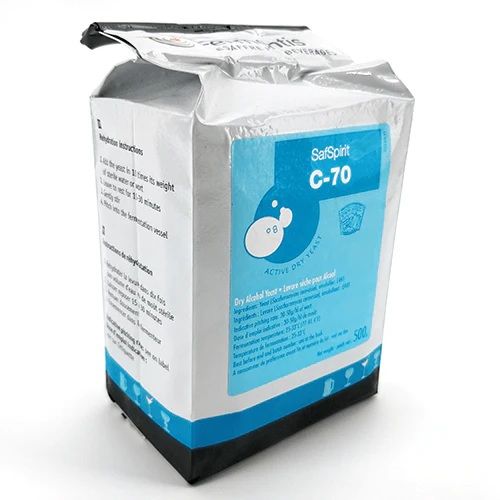
Ferments SafSpirit C-70 for Rum and Mezcal
Manufacturer: Fermentis
Categories: Distilling Yeasts, Distilling Yeast
Purpose‑built for cane and agave fermentations, Ferments SafSpirit C‑70 by Fermentis is a robust, multipurpose distilling yeast trusted by craft and professional distillers. It delivers a clean, reliable ferment that still expresses a vibrant ester profile, helping you produce premium rum and mezcal with lifted tropical fruit notes, depth, and balance.
Whether you’re running pot stills for characterful spirits or columns for crisp, modern styles, SafSpirit C‑70 is engineered to handle challenging substrates like molasses and agave must, supporting consistent performance from mash‑in to spirit cut.
Why choose SafSpirit C‑70
- Designed for rum and agave spirits: excels in molasses, cane juice/syrup, and agave washes.
- Expressive yet clean: generates fruity esters (tropical fruit, banana, pineapple) while maintaining a tidy baseline for precise blending and cuts.
- Robust fermentation performance: dependable kinetics with a rapid start and steady progression, even in demanding conditions.
- Supports flavour complexity: favourable congener development for layered, characterful distillates.
- High gravity capable: well suited to concentrated washes when paired with appropriate nutrition and oxygenation.
- Ethanol tolerant: selected to reach elevated alcohol levels typical of rum and agave ferments.
- Versatile across stills: complements both pot and column operations; adapts to various production philosophies.
Ideal applications
- Rum: molasses‑based, panela/cane syrup, and cane juice styles (from light to heavy).
- Agave spirits: traditional mezcal and other agave‑based distillates, preserving varietal character and terroir expression.
Sensory profile
- Tropical fruit esters: notes reminiscent of banana, pineapple, and ripe stone fruit.
- Balanced fermentation character: clean foundation that allows molasses richness or agave nuances to shine.
- Congener structure: supportive backbone for ageing in wood or enjoying unaged styles with vibrancy.
Recommended usage
Guidelines below reflect common practices; adjust to your process, gravity, and house profile.
- Rehydration: sprinkle into clean water at approximately 10 times the yeast weight, typically around 25–35°C. Allow 15–20 minutes, then gently homogenise before adding to the wash.
- Pitching: commonly 0.5–1.0 g/L for standard gravity washes; increase for high gravity or challenging substrates.
- Fermentation temperature: widely used in the warm range typical of rum and agave ferments; manage temperature to balance ester formation and fermentation speed.
- Nutrition: molasses and agave washes can be nutrient‑deficient; supplement with a complete distilling nutrient (nitrogen, vitamins, minerals) as required.
- Oxygenation: aerate at the start to support a healthy growth phase, especially in high gravity or nutrient‑lean conditions.
- pH management: begin in the mid‑acidic range common for rum and mezcal ferments; maintain adequate acidity to discourage contamination.
- Fermentation time: varies with gravity, temperature, and nutrients; allow complete attenuation and a brief settling period before transfer.
Distilling notes
- Pot stills: expect a fuller, ester‑forward spirit with pronounced fruit and congeners suited to ageing or robust white expressions.
- Column stills: achieve a cleaner spirit with controlled fruit lift; adjust reflux and cut strategy to taste.
- Cuts and blending: SafSpirit C‑70’s tidy baseline simplifies decision‑making while retaining character for complexity.
Process tips for best results
- Use clean, sanitised vessels and lines to protect yeast health and preserve desired aromatics.
- Stage nutrient additions in high gravity ferments for steady kinetics and reduced stress.
- Avoid excessive heat spikes to keep esters pleasant and reduce harsh notes.
- Record gravity, temperature, and pH trends for consistency across batches.
Storage and handling
- Keep cool, dry, and away from oxygen and direct light.
- Use promptly once opened and reseal as best practice to minimise moisture uptake.
- Follow Fermentis guidance for optimal performance and longevity.